2027 Beacon Video Initiatives
Where we've been
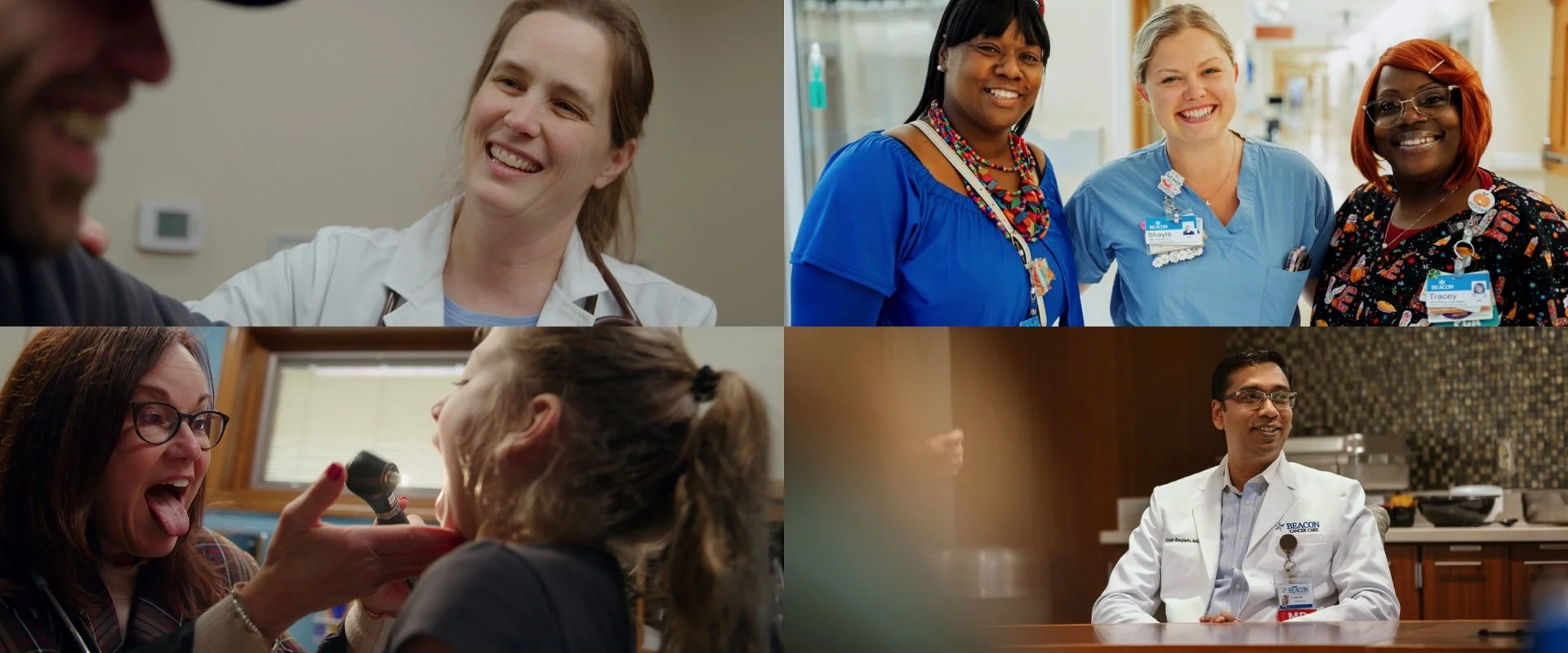
Beacon has been telling patient stories for years. For most of that time, the format has been tried and true: off-camera interviews and high-quality b-roll of patients living their lives.
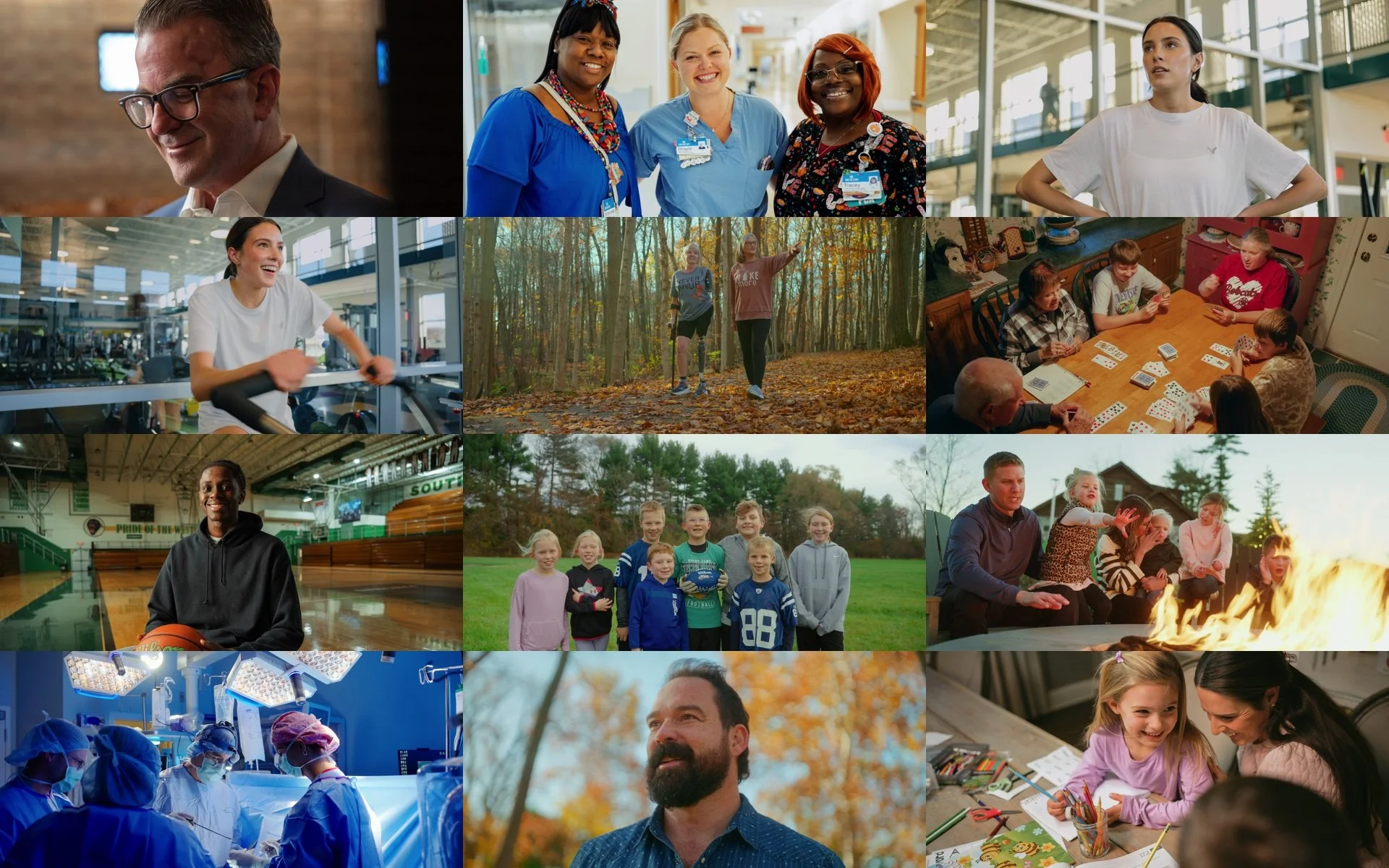
2023 brand spot, "We're Here." It told the system story, showing the range of care across the community. This is where we first brought in real people, found footage and photos, tied together with a VO and a message.
The last two years, "For a Healthier You." The work focused on individual patients, edited as a montage.
Brand spots. Patients' stories and quotes appeared as text on screen. We didn't hear their voices.
Service-line spots. Some followed the brand approach: montage edits with headlines and quotes. Others told one patient's story, with the patient heard in an off-camera interview over polished b-roll.
Why this is the right direction to keep going
Most healthcare advertising looks and sounds the same: polished scenes that feel staged, an emotional VO, and a lot of talk about how much the hospital cares. Beacon has already gone a different way by featuring real patients and their stories. This round leans further into what's working.
Real people, real moments. Real patients and, wherever possible, their own photos and videos. When a story doesn't have much, we get resourceful instead of staging scenes.
The patient's lived experience. We hear what care felt like for them, in their own words.
Providers who were there. Doctors and nurses talk about their patients with compassion, instead of a VO telling us Beacon cares. (similar to apple we can use zoom calls if provider is hard to nail down)
Familiar, everyday formats. Phone videos and direct-to-camera talking feel like what people already watch on social media.
Still crafted. The polish is in the edit, sound, type and framing, so it feels real and still looks like Beacon.
2024 BRAND SPOT
Example from 25-26 Brand Campaign (there were multiple versions and patients highlighted)
Apple References
The goal isn't to make a Beacon version of these. It's to look at the choices they made and why they work.
Direct to camera interviews. Small but powerful shift from off-camera interviews.
Nobody tells their whole story. Each person gets a short moment, and together they build the bigger picture, similar to the multi-patient spots we've done.
Visually, it keeps moving: from interview to found footage to motion graphics and back. Phone videos, photos, medical images and news clips all play a part.
The formats are mixed on purpose. Vertical, square and widescreen sit together on a clean white background, and the frames change size and position.
Type is part of the design. Words type out on screen, sometimes large and cropped.
The white space and simple framing make very different footage feel like one piece. For Beacon, our rounded frames and brand colors would do that job.
The watch only shows up as part of the stories. The spot never talks about features or models. For us, the care should come through the same way, in the stories, not as a pitch.
SUGGESTED CHANGES FOR 2027
Patients speak to camera. We hear the story from them, which makes it more personal and more believable.
Providers join in. The nurse or doctor who was there talks about the patient, as in Rachel's story. Their name and location on screen help carry the proof in Michigan.
Real material: phone videos, photos, scans, news clips. It shows what really happened and means less recreated b-roll.
Real life b-roll footage shows where patients are now, and it gives us photos and video for other marketing.
Deliberate edit, sound, type and framing bring very different material together so it still looks like Beacon.
A locked style guide: Beacon's look (rounded frames, white space) plus what's new (mixed formats, layered frames, handwriting). It keeps everything consistent, and because of the mixed formats and moving frames, one edit adapts easily to any platform.
Every interview could end with this simple question: "What does healthier look like for you now?" It ties every story to the brand line and works on its own for social. Also could be a separate edit down the road.
One system for the year
All patient stories are shot in the same style: direct-to-camera interviews, the provider's perspective and real material from each patient's experience. Brand and service-line work use the same look and design choices, so everything feels connected. Mix big moments with everyday care, vary the patients and service lines, and favor stories with strong real material like photos, videos and scans.
How it's structured
Each story is captured so it works on its own and as part of a group.
Stories are found through service line recommendations along with selections from past written stories.
Build 2 or 3 master :60s, each with three stories. They can be split by market (Indiana and Michigan), by time of year, or by the kind of care.
Build out from there: :30s, :15s, vertical and social cuts, and longer single-story pieces, as the media plan needs them.
Why it will work
Hearing a patient tell their own story is more believable than reading a quote.
Providers talking about their patients show the care better than a list of services.
We're not selling a feature or a building. We're showing what care at Beacon is like.
People choose a hospital based on trust and what they hear from others.
It builds on the patient stories Beacon already tells, so it's a natural next step, not a big change.